
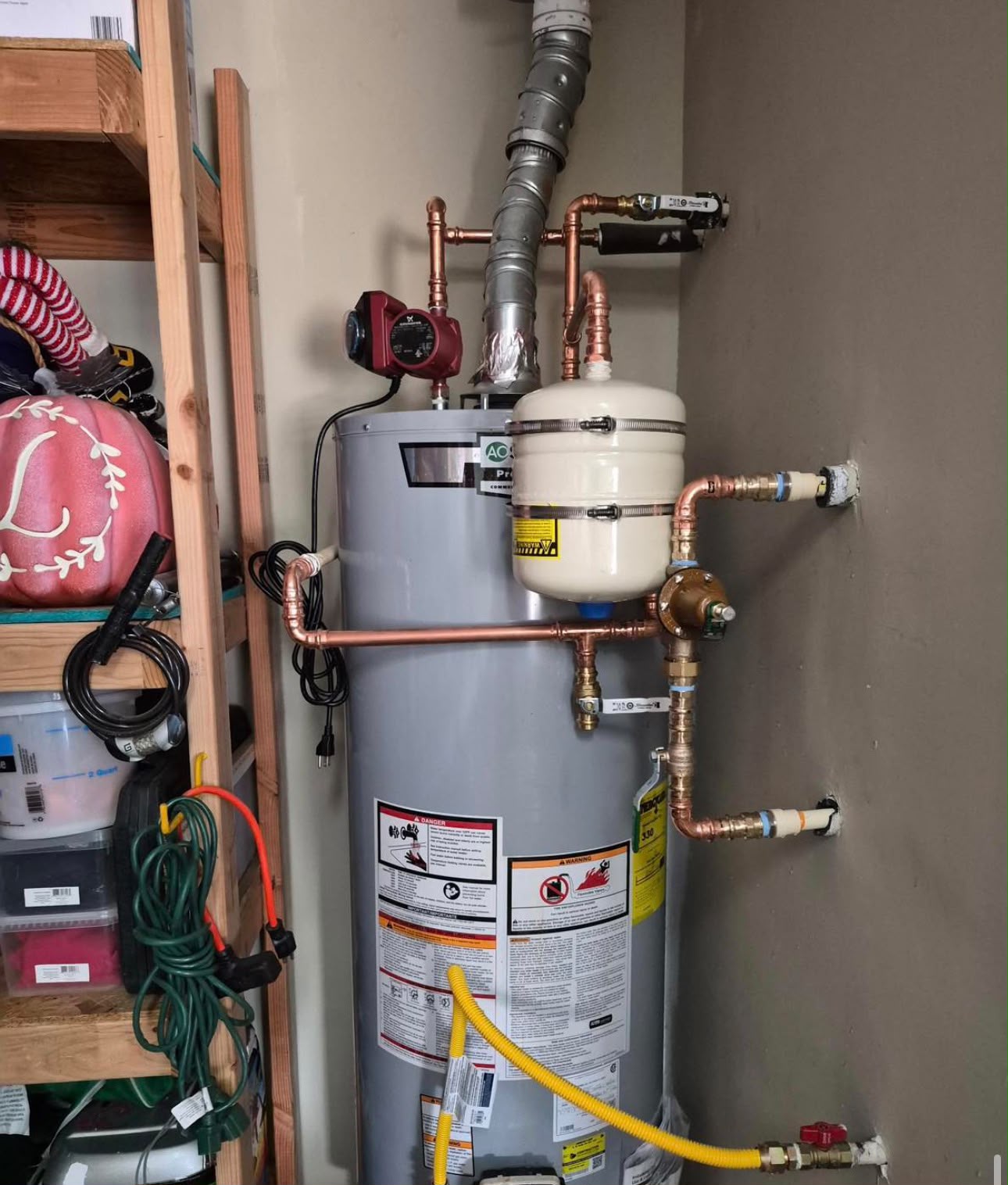
Signs You Need Tankless Water Heaters
- You are running out of hot water regularly with a tank unit and want to explore alternatives
- You are renovating and want to free up floor space currently used by a storage tank
- You want to compare tankless against a tank replacement before deciding
- Your current tankless unit is throwing an error code or short-cycling
- You notice reduced flow or fluctuating temperature from an existing tankless unit
- You are building or renovating a condo unit with limited mechanical space near Yonge and Sheppard
How Tankless Differs From a Storage Tank
A tankless unit heats water as it passes through the unit rather than keeping a large volume hot and ready, which means capacity is governed by flow rate rather than tank size. This matters most when multiple fixtures run hot water at the same time, such as a shower and a dishwasher, since the unit needs to keep up with combined demand rather than draw down a reserve.
Because there is no standing tank, floor space requirements are smaller, which is part of why tankless units come up often in condo renovations and in basements where space is at a premium, including finished basements in older North York bungalows where a bulky tank competes with storage or living space.
Gas Line Capacity and Venting
Gas-fired tankless units typically require a higher gas input than a comparable tank unit to heat water instantly, which means the existing gas line and meter capacity need to be checked before installation, and in some homes the gas line itself may need to be upsized. This is a step that is easy to overlook if a household simply assumes any gas line that fed a tank heater will work for a tankless replacement.
Venting requirements also differ: tankless units generally use different vent materials and routing than a standard atmospheric tank vent, and many require a dedicated vent terminating through an exterior wall. In condominium suites near Yonge and Sheppard, this can be the deciding factor, since the building's original venting infrastructure may not accommodate a tankless unit's vent type without broader building involvement, whereas a detached home typically has more flexibility to route a new vent.
Sizing for Demand and Winter Conditions
Sizing a tankless unit means matching its flow rate to the number of fixtures likely to run simultaneously in your household, rather than picking based on the number of occupants alone. Larger households or homes with multiple bathrooms often need a higher-capacity unit, or in some cases benefit from evaluating whether one central unit meets the whole home's needs.
Toronto winters lower the incoming municipal water temperature, and because a tankless unit must raise that water to the target temperature in a single pass, colder incoming water reduces the maximum flow rate the unit can support at full temperature rise. This is worth discussing during sizing so the unit selected performs adequately in January, not just in warmer months.
Descaling, Water Quality, and Rental Considerations
Tankless heat exchangers are more sensitive to mineral scale buildup than a storage tank because water passes through narrow channels at high heat, and scale can gradually reduce flow and efficiency in areas with harder water. Periodic descaling, using an isolation valve kit installed at the time of setup, is the standard way to manage this, and we install those valves as part of a proper tankless installation so future maintenance is straightforward.
As with tank units, tankless water heaters can be either owned or, less commonly, provided through a rental arrangement, and we install owned units while remaining neutral on which approach suits your household's financial preferences.
How We Handle It
- 1
Feasibility assessment
We evaluate your existing gas line, venting path, and electrical supply to confirm whether tankless is practical in your space.
- 2
Sizing consultation
We review your household's simultaneous hot water demand to recommend an appropriately sized unit.
- 3
Prepare gas and venting
We upgrade the gas line or install proper venting where the assessment shows it is required.
- 4
Install the unit
We mount and connect the tankless heater, including isolation valves for future descaling.
- 5
Test and explain maintenance
We test flow and temperature performance and explain how periodic descaling supports the unit going forward.
Why Choose North York Plumbing
We keep the conversation direct, connect the recommendation to what we can observe and take care around the surrounding property. Our 24/7 line is available for urgent situations, while planned work can begin with a detailed request.
Read our reviews on GoogleFrequently Asked Questions
Will my existing gas line work for a tankless water heater?
Not always. Tankless units often need a higher gas input than a tank heater, so we check your existing line and meter capacity before recommending an installation, and upsizing may be necessary.
Can a condo near Yonge and Sheppard have a tankless water heater installed?
It depends on the suite's venting options, since many condo tankless installations are limited by what the building's original venting infrastructure allows. We assess this on-site before recommending tankless over a tank unit.
Do tankless water heaters need regular maintenance?
Yes, periodic descaling helps manage mineral scale buildup inside the heat exchanger, particularly in areas with harder water. We install isolation valves at setup to make this maintenance straightforward.
Will a tankless unit perform the same in winter as in summer?
Colder incoming water in winter means the unit has to work harder to reach the same output temperature, which can reduce the maximum flow rate available compared to summer. We factor this into sizing recommendations.
Is tankless always better than a tank water heater?
Not necessarily; it depends on your gas line, venting options, space constraints, and hot water usage pattern. We assess both options honestly rather than assuming tankless is the right fit for every home.