
Signs You Need Drain Line Installation
- You're finishing a basement and need drain lines run for new fixtures
- An addition or renovation requires extending existing drain lines to new locations
- Old cast-iron drain lines are corroding or showing signs of failure
- You're relocating a kitchen or bathroom and existing drains don't reach the new layout
- Recurring backups suggest a drain line has inadequate slope or is undersized
- A home inspection flagged aging drain piping that needs replacement
Planning pipe material and routing
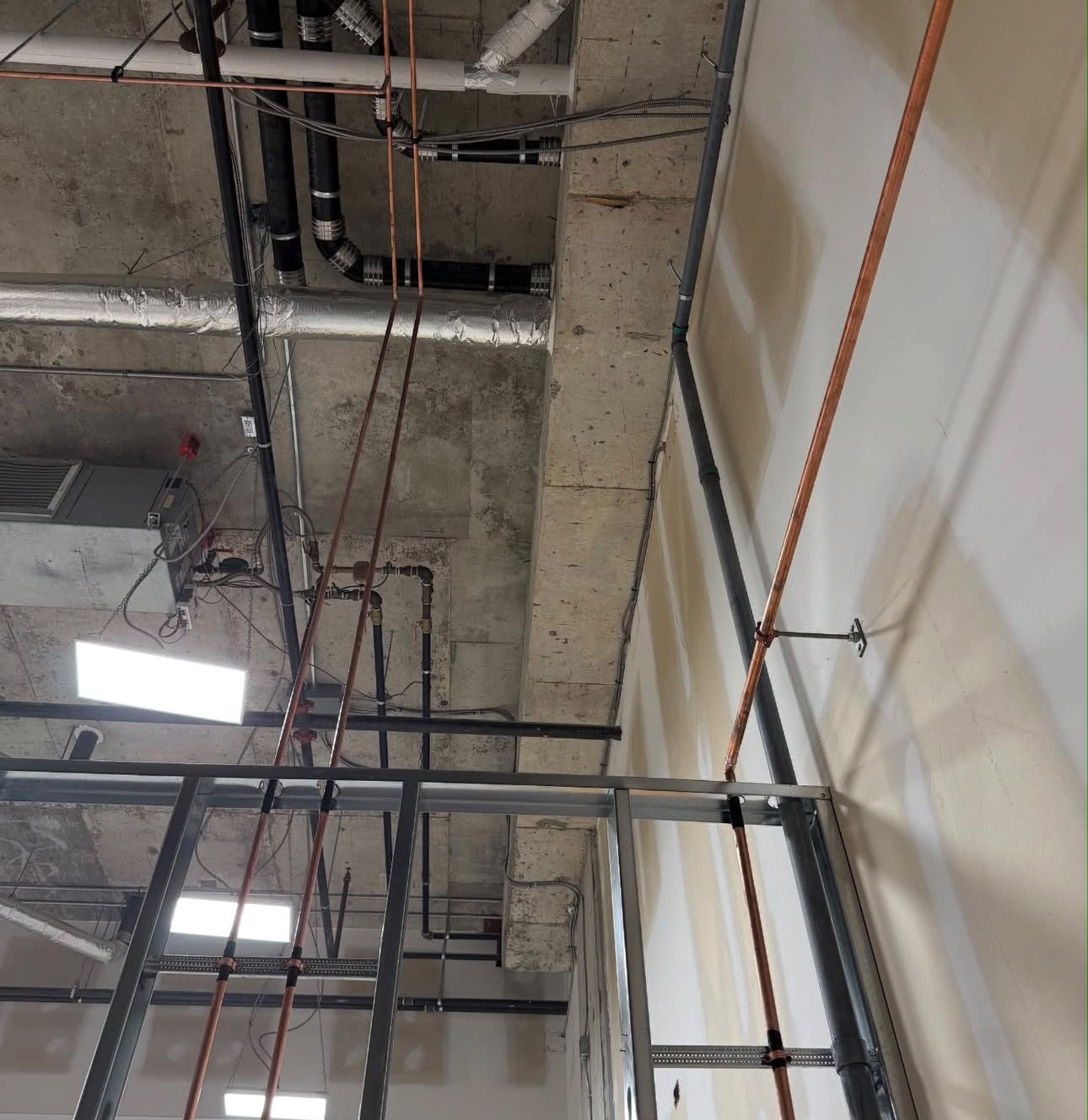
New drain line installation starts with mapping the route from each fixture back to the main stack, choosing pipe material, usually ABS in most North York homes today, and confirming diameter is appropriate for the fixture load being served. We also check that routing doesn't conflict with structural joists or existing mechanical systems in the space.
In post-war Downsview and Bathurst Manor bungalows, existing drainage is often cast iron, and new branch lines frequently transition from ABS to cast iron using approved fittings, a connection point we check carefully since it's a common source of future leaks if done improperly.
Slope and venting requirements
Every drain line needs consistent slope toward the main stack, too little slope causes solids to settle and clog, while too much can cause liquid to outrun solids and leave debris behind. We calculate slope across the entire run, particularly important for basement installations in Downsview and Bathurst Manor where headroom is limited and slope has to be planned precisely from the start.
Venting is installed or tied into existing vent stacks so each fixture's trap stays sealed and functions properly. In condo units near Yonge and Sheppard, any drain line changes typically need to work within a shared stack system, which limits how much rerouting is possible without affecting other units.
Installation and pressure testing
Once the route is confirmed, pipe is cut, joined, and supported at the required intervals to prevent sagging over time, which would otherwise create low spots that collect debris. We install cleanouts at appropriate points along the run to allow future access if a clog develops.
Before any wall or floor is closed up, we pressure or water test the new drain line to confirm every joint is sealed and slope carries water fully to the main stack without pooling.
Cast iron versus ABS decisions
Deciding whether to replace an aging cast-iron section entirely or transition to ABS at a single point depends on the overall condition of the existing line, not just the section being worked on. In Downsview and Bathurst Manor bungalows where cast iron has been in the ground or under the slab for decades, we assess wall thickness and corrosion at accessible points before recommending a full or partial replacement.
Where a partial transition makes sense, the connection point itself needs the right fitting and support so differential movement between the two materials over time doesn't stress the joint, which is a common source of slow leaks if the transition isn't detailed properly.
Condominium considerations
Drain line work in condo units near Yonge and Sheppard is almost always confined to branch lines within the suite, since the vertical stack itself is shared building infrastructure that individual owners generally can't modify. We identify where the suite's plumbing meets that shared system before planning any rerouting.
Any work that could affect flow to units below typically needs coordination with building management and sometimes a scheduled shutoff, so we build that into the project timeline rather than assuming access is immediate.
How We Handle It
- 1
Map the drain route
We plan the path from each fixture back to the main stack, checking for structural conflicts along the way.
- 2
Select pipe material and sizing
ABS or transition fittings to existing cast iron are chosen based on the home's existing drainage system.
- 3
Install with correct slope
Pipe is run and supported to maintain consistent slope toward the main stack.
- 4
Tie in venting
New lines are connected to existing vent stacks so every trap stays properly sealed.
- 5
Test before closing walls
We test the new line for leaks and proper flow before any finishing work covers it.
Why Choose North York Plumbing
We keep the conversation direct, connect the recommendation to what we can observe and take care around the surrounding property. Our 24/7 line is available for urgent situations, while planned work can begin with a detailed request.
Read our reviews on GoogleFrequently Asked Questions
What pipe material do you use for new drain lines?
ABS is standard for most new drain line work in North York homes, and we use approved transition fittings when connecting to existing cast-iron drainage.
Do I need a permit for new drain line installation?
Significant drain line changes often require permits and inspection, so we recommend confirming scope with the City of Toronto before work begins.
Can new drain lines be added to a shared stack in a condo?
It's more limited than in a house, since the stack near Yonge and Sheppard serves multiple units, so any changes need to work within that shared system.
Why does drain slope matter so much?
Correct slope keeps water moving at a pace that carries solids along with it, while incorrect slope can cause clogs or leave debris behind even in a brand-new line.
Will you add cleanouts to new drain lines?
Yes, cleanouts are installed at practical points along the run to allow future access if a clog needs to be cleared.