
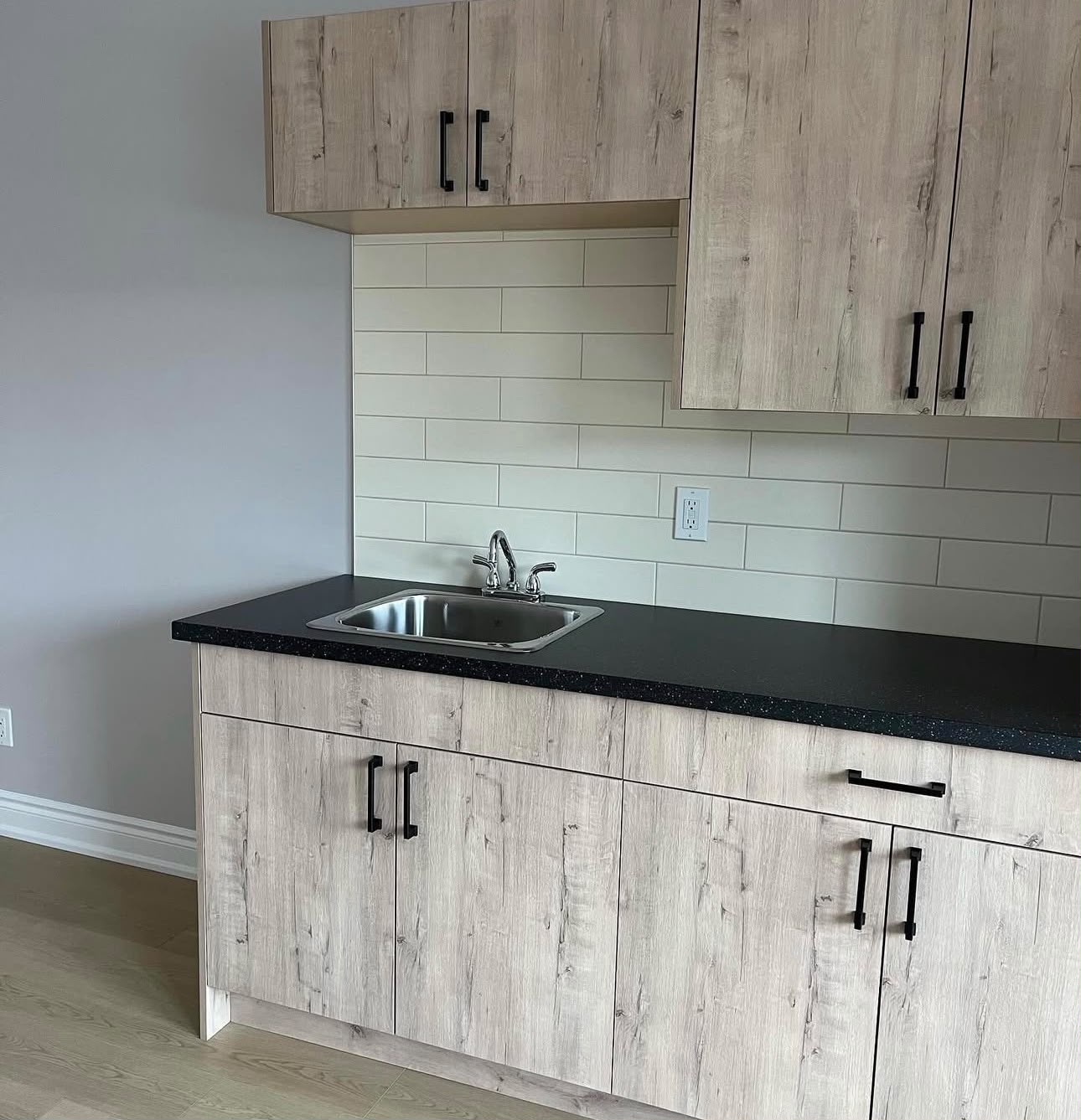
Signs You Need Bathroom Faucet Repair
- A slow drip continues from the spout after the handles are shut off
- The pop-up drain lever no longer holds the stopper closed
- Handles feel loose or spin without engaging the shutoff properly
- Water leaks from underneath the faucet base onto the countertop
- Flow from the spout has become noticeably weak
- Hot water trickles even when only the cold handle is opened
Typical bathroom faucet designs
Many older North York bathrooms still have two-handle compression or cartridge faucets set into a three-hole countertop configuration, where hot and cold are controlled independently. These units are compact, which means the internal cartridges or washer stems are smaller and can be more fiddly to access without the right tools compared to a kitchen faucet.
Newer single-handle bathroom faucets from recent renovations typically use a single cartridge controlling both temperature and flow, so a failure there affects the whole faucet at once rather than just one side.
Countertop leaks and the pop-up assembly
Because bathroom faucets sit directly over a vanity countertop, even a small base leak shows up quickly as water pooling or seeping into the cabinet below, which can damage particleboard vanity bases common in many homes. We check the base gasket and the supply connections underneath as part of any bathroom faucet repair.
The pop-up drain lever, which is mechanically linked to the faucet assembly on many bathroom sinks, is also a common point of complaint. A lever that no longer holds the stopper down is usually a linkage adjustment rather than a faucet valve issue, but it's diagnosed at the same visit since the two are physically connected.
Repair approach for bathroom units
For a compression-style two-handle faucet, we replace the specific washer or stem for whichever handle is dripping, since it's common for only one side to fail while the other remains fine. For single-handle cartridge units, the whole cartridge is replaced as a unit, which resets both temperature blending and shutoff at once.
We also address the pop-up linkage adjustment or clevis strap while the faucet is apart, and check the flexible supply lines under the vanity, since they're often original to the faucet's install and worth inspecting when other components are already being serviced.
Preventing a repeat
Bathroom faucets often get less attention than kitchen faucets between repairs simply because they see lighter use, which means mineral scale can build up quietly inside the aerator and cartridge for longer before anyone notices reduced flow. Wiping down the spout and handles periodically and removing the aerator now and then to rinse out sediment helps keep the internal parts from having to work against scale on top of normal wear.
For homes on well water or with unusually hard supply, scale forms faster inside the cartridge itself, and a faucet that's just been repaired can still drip again sooner than expected if the underlying mineral content isn't factored in. We'll flag when a faucet's wear pattern looks scale-driven rather than purely age-related, since that's useful context for the next time a handle starts feeling stiff.
A bathroom faucet that's rarely used, such as one in a guest bathroom, can actually develop its own problems from disuse rather than overuse, since a cartridge that sits still for long stretches can seize slightly or let sediment settle around its seals, so an occasional run of hot and cold water through an underused faucet helps keep it moving freely.
How We Handle It
- 1
Confirm which handle or side is affected
We isolate whether the drip is on the hot side, cold side, or both, which narrows the likely part.
- 2
Shut off vanity supply valves
The dedicated shutoffs under the sink are closed so the repair can proceed without shutting off water to the whole home.
- 3
Remove handle and access the cartridge or stem
The specific worn component is exposed for inspection and replacement.
- 4
Replace and check the pop-up linkage
The stopper lever and linkage are tested and adjusted since they're connected to the faucet body on most bathroom sinks.
- 5
Test full range of motion and drain function
We run hot and cold through their full range and confirm the pop-up seals properly before finishing.
Why Choose North York Plumbing
We keep the conversation direct, connect the recommendation to what we can observe and take care around the surrounding property. Our 24/7 line is available for urgent situations, while planned work can begin with a detailed request.
Read our reviews on GoogleFrequently Asked Questions
Why does only one handle on my bathroom faucet drip?
Two-handle bathroom faucets have independent washers or cartridges for hot and cold, so it's common for one side to wear out well before the other depending on usage patterns. We replace just the affected side rather than both.
My pop-up stopper won't stay closed anymore, is that related to the faucet?
On most bathroom sinks the pop-up stopper is mechanically linked to a lever near the faucet base, so a loose or disconnected linkage is a common and separate cause from the faucet valves themselves. We check it during the same visit since it's part of the same assembly.
Can a leak under my bathroom faucet damage the vanity?
Yes, a base or supply line leak that goes unnoticed can soak into a particleboard or MDF vanity base over time, which is why we recommend addressing even a small drip under the sink promptly.
Do bathroom faucet cartridges differ from kitchen ones?
Yes, bathroom faucet cartridges are generally smaller and rated for lighter use than kitchen faucet cartridges, and they're specific to the faucet's make and model, so we match the replacement part to the exact fixture rather than using a generic one.